Compare grain and reflection before choosing how the information appears.
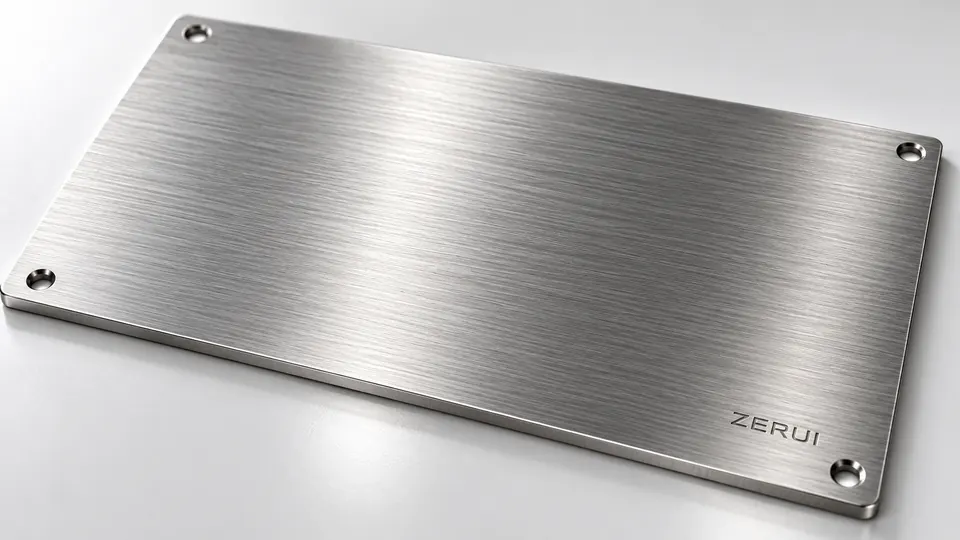
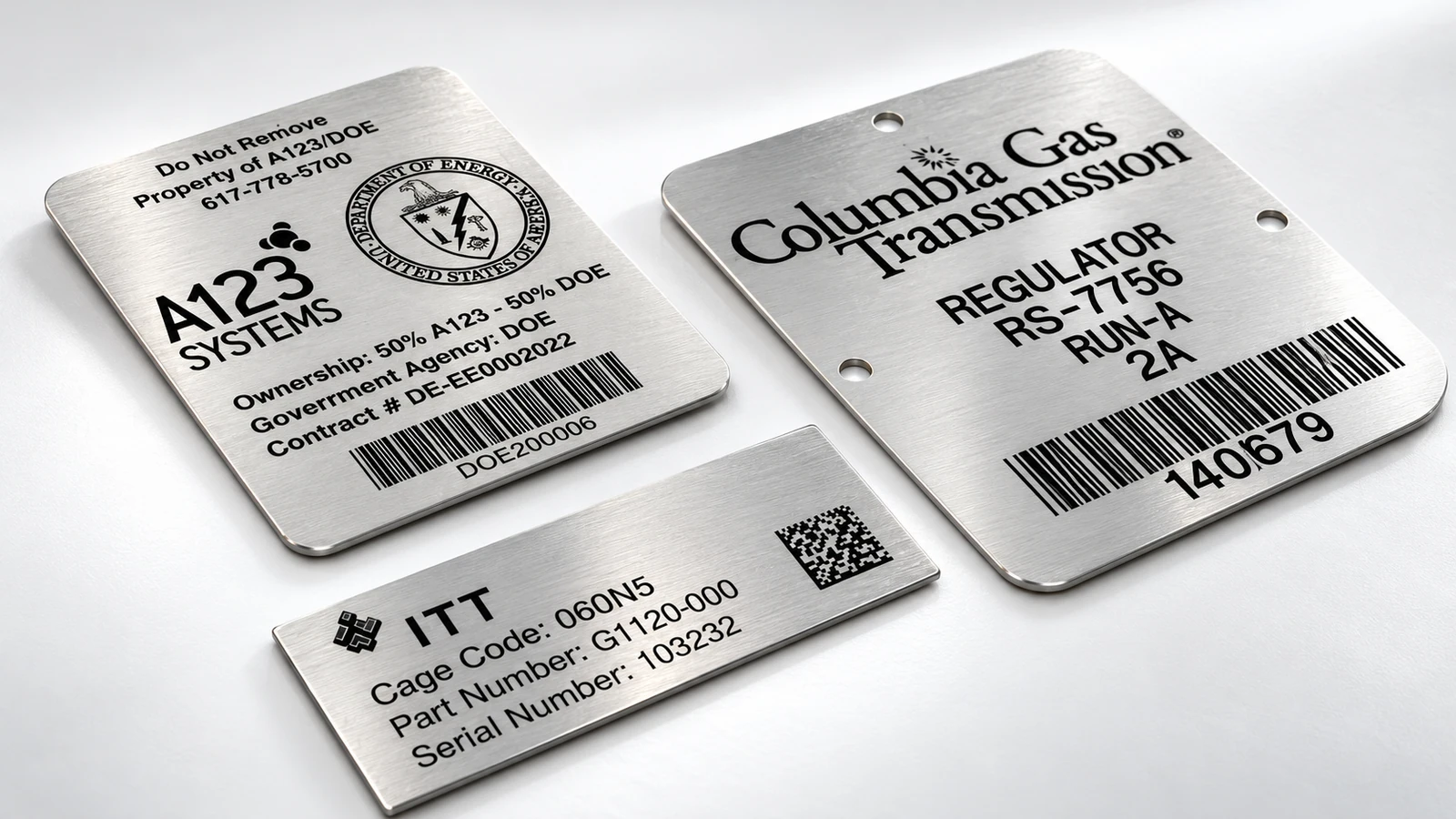
01 / BRUSHED
BrushedDirectional grain
Fine aligned lines create directional highlights that move with the viewing angle.
Design direction
Equipment branding and data plates
Sample review
Agree grain direction, texture and graphic contrast.
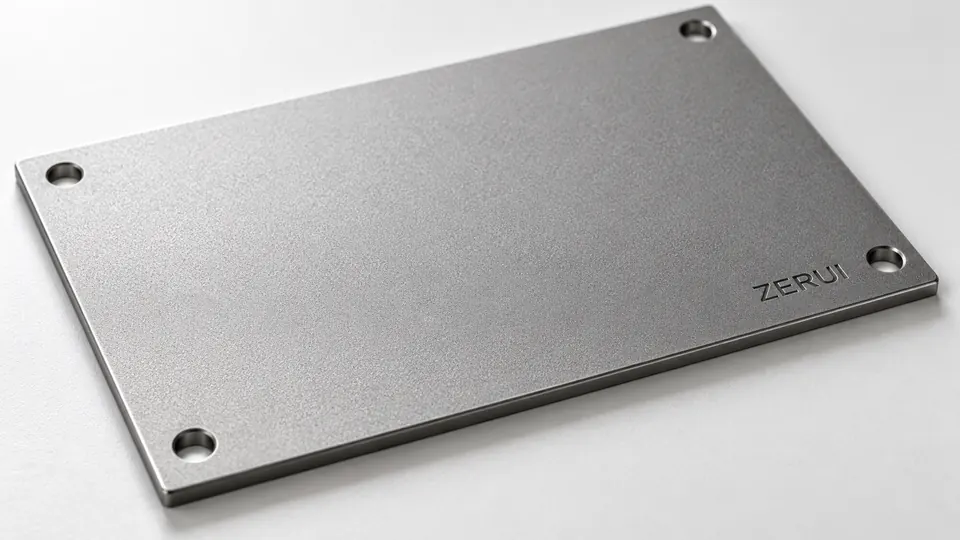
02 / MATTE
MatteSoft, diffuse reflection
An even texture softens highlights and reduces distracting glare. Several processes can produce a matte appearance.
Design direction
Control panels and operating instructions
Sample review
Agree the process, texture and cleaning requirements.
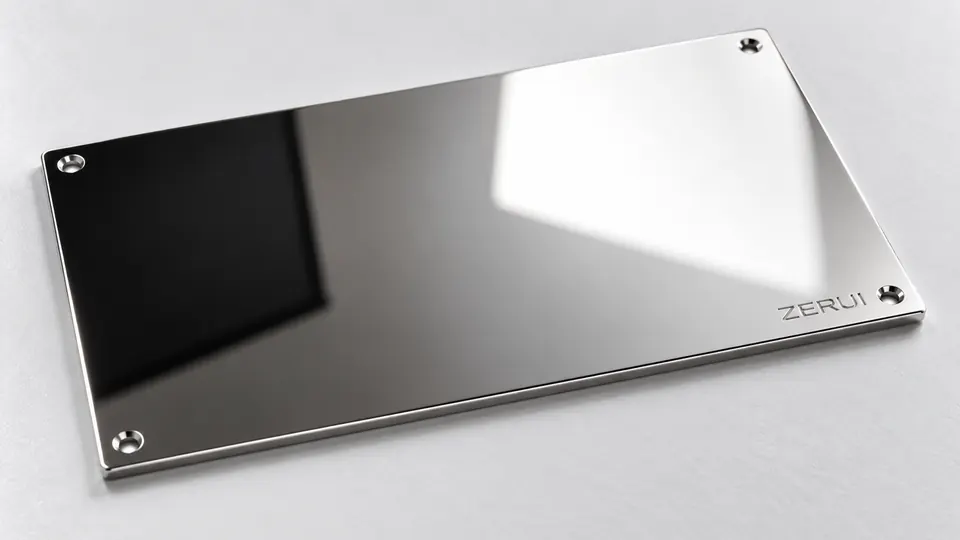
03 / POLISHED
PolishedDefined reflections
A smooth surface creates bright, defined reflections and emphasises edges, changing with its surroundings.
Design direction
Brand emblems and decorative plates
Sample review
Confirm gloss with a sample and consider fingerprints, fine scratches and viewing angle.
Confirm texture, gloss and colour with an agreed physical sample.
MATERIAL INSPIRATION BOARD
Bring material into your design.
Material, artwork and finish. Consider them together.
201 / 304 / 316L
Stainless steel · Clear and precise
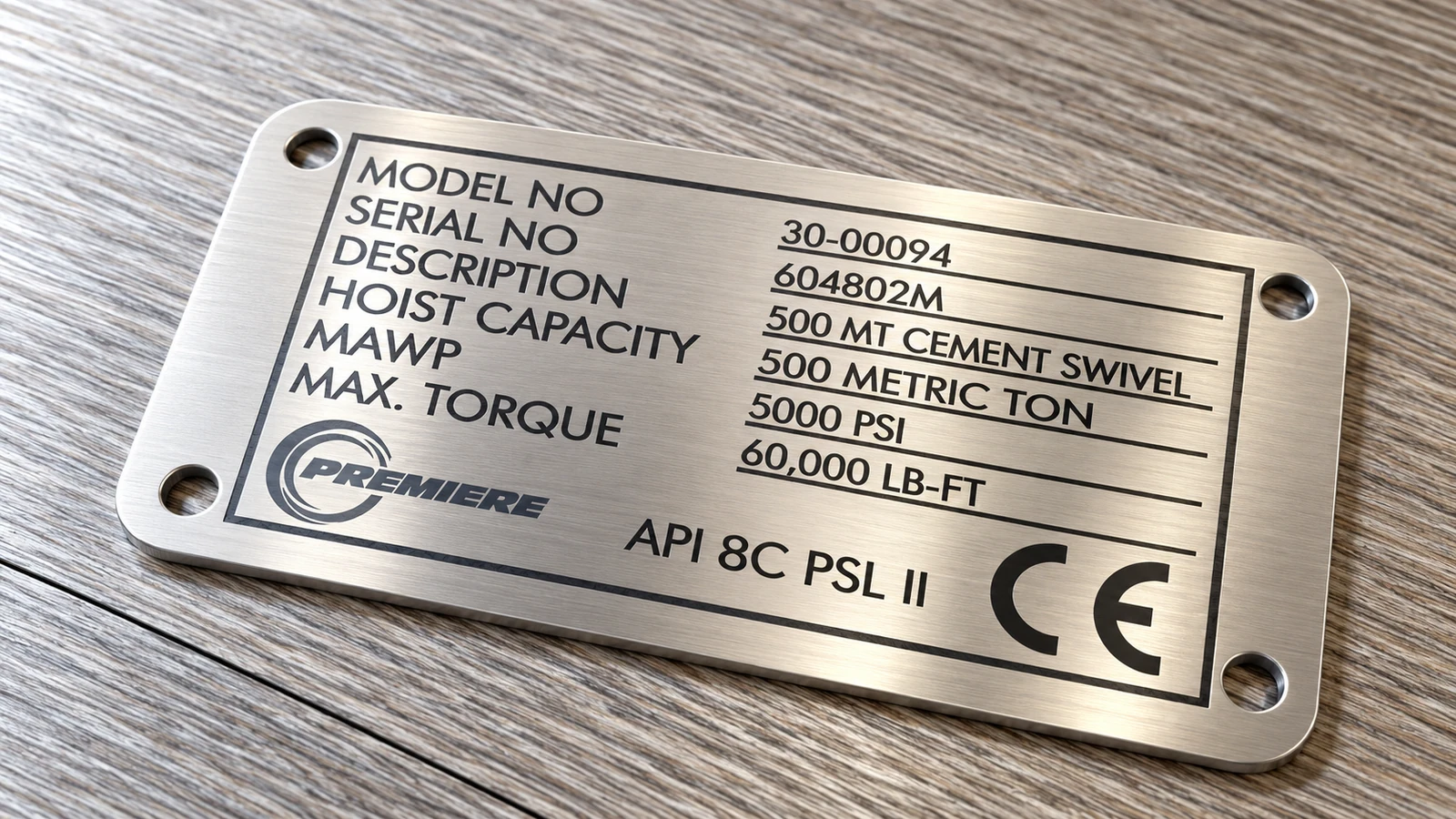
Combine grain, fine text and space for precise equipment identification. Choose the grade for the environment; appearance does not establish the alloy.
BrushedEtchedTechnical data
ALUMINIUM
Aluminium · A versatile graphic surface
Explore natural silver, anodizing and graphic combinations to organise brand colours, diagrams and operating areas.
AnodizedScreen printControl panels
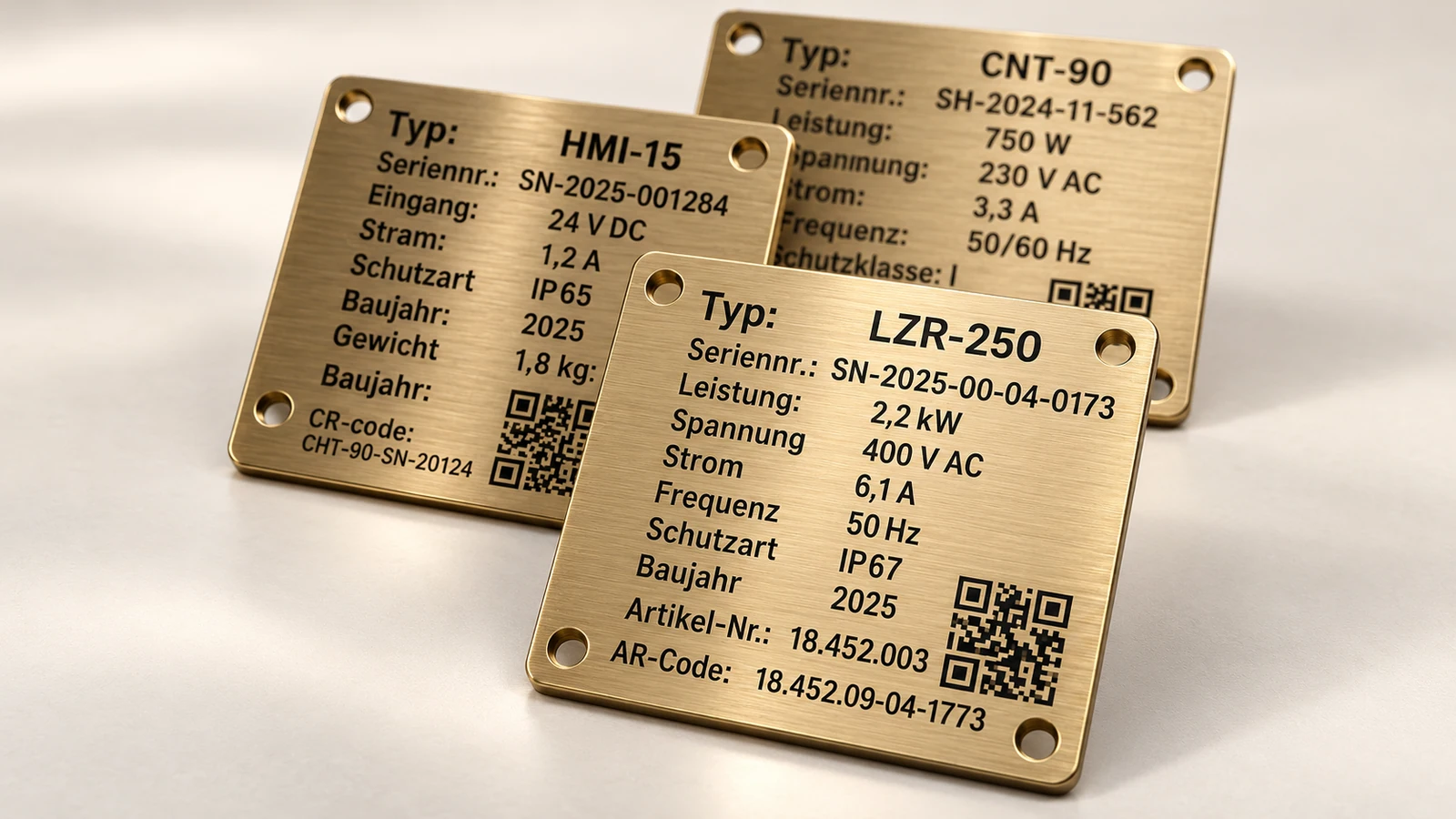
H62 BRASS
H62 brass · Warmth and contrast
Explore natural brass or nickel-plated silver with recessed graphics and filling. Confirm colour and plating with a sample.
Natural brassNickel platedBrand identity
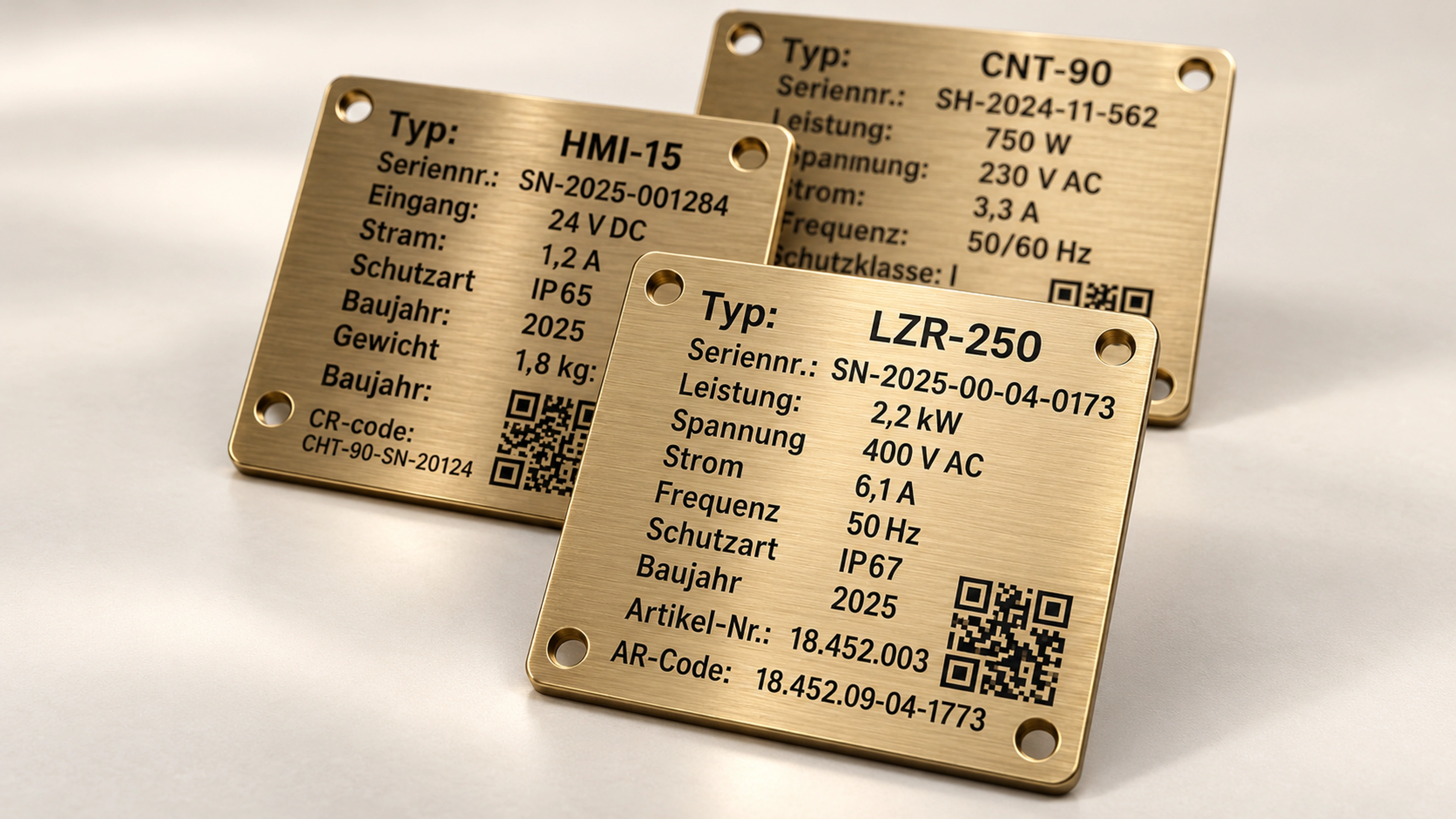
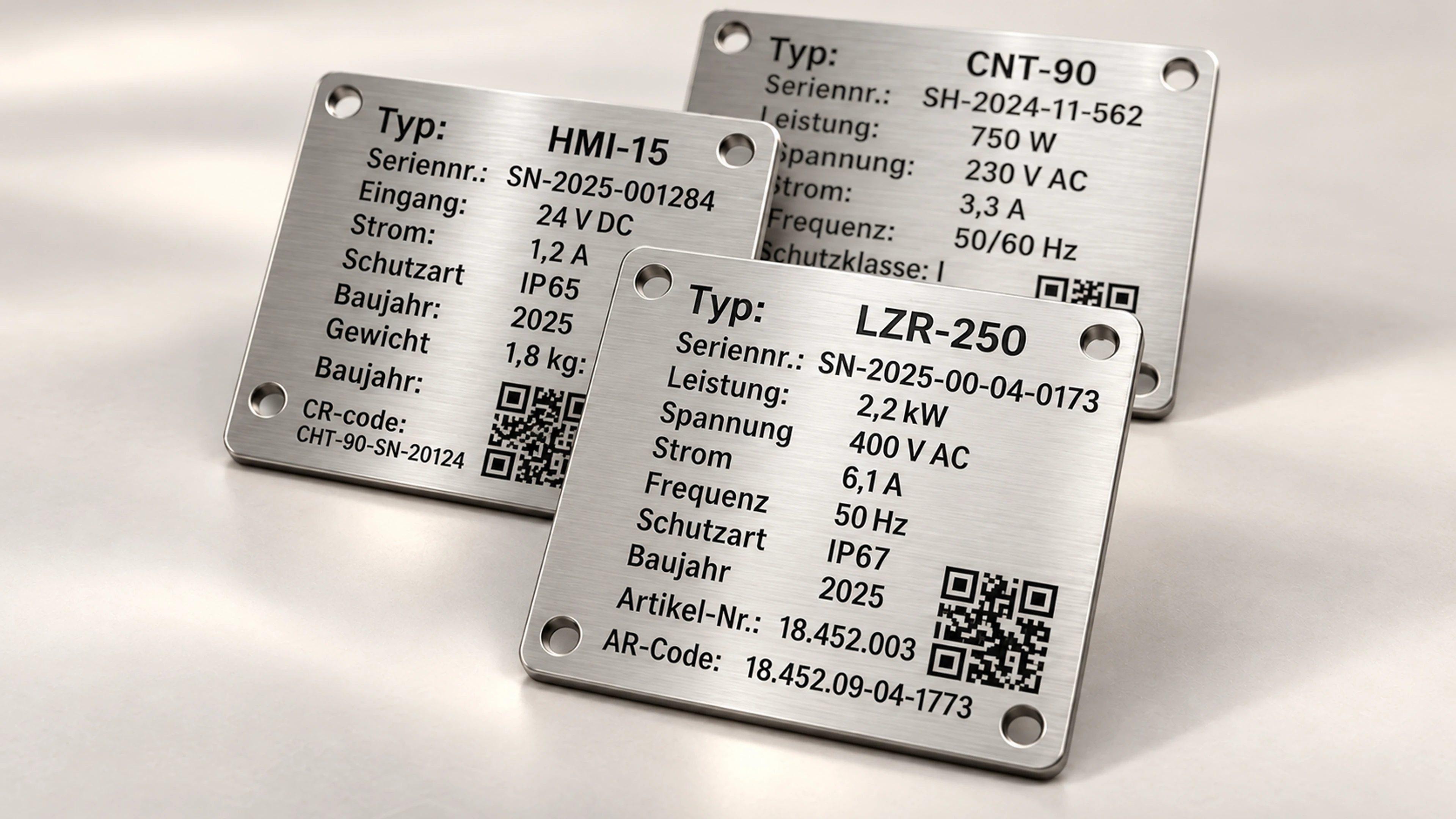
One brass base. Two distinct surfaces.
Natural brass shows its gold tone; nickel plating gives the brass a silver-white surface.
Natural brass etching
Keep the golden brass face, with etched graphics and colour filling for contrast.
Surface colour
Natural golden brass
Construction
Brass substrate with its natural surface
Nickel-plated brass etching
A silver-white nickel face with etched graphics; the coating covers the original brass colour.
Surface colour
Silver-white nickel
Construction
Brass substrate + nickel coating
Material
Material grades
Review before choosing
Stainless steel
201 / 304 / 316L
Select the grade for the environment, appearance and process.
Aluminium
ALUMINIUM
Consider anodised finishes and weight requirements.
H62 brass
H62 BRASS
A brass surface, with nickel-plated etching also available.